
Flooring for Old Houses: An Interior Designer’s Guide to Choosing Well
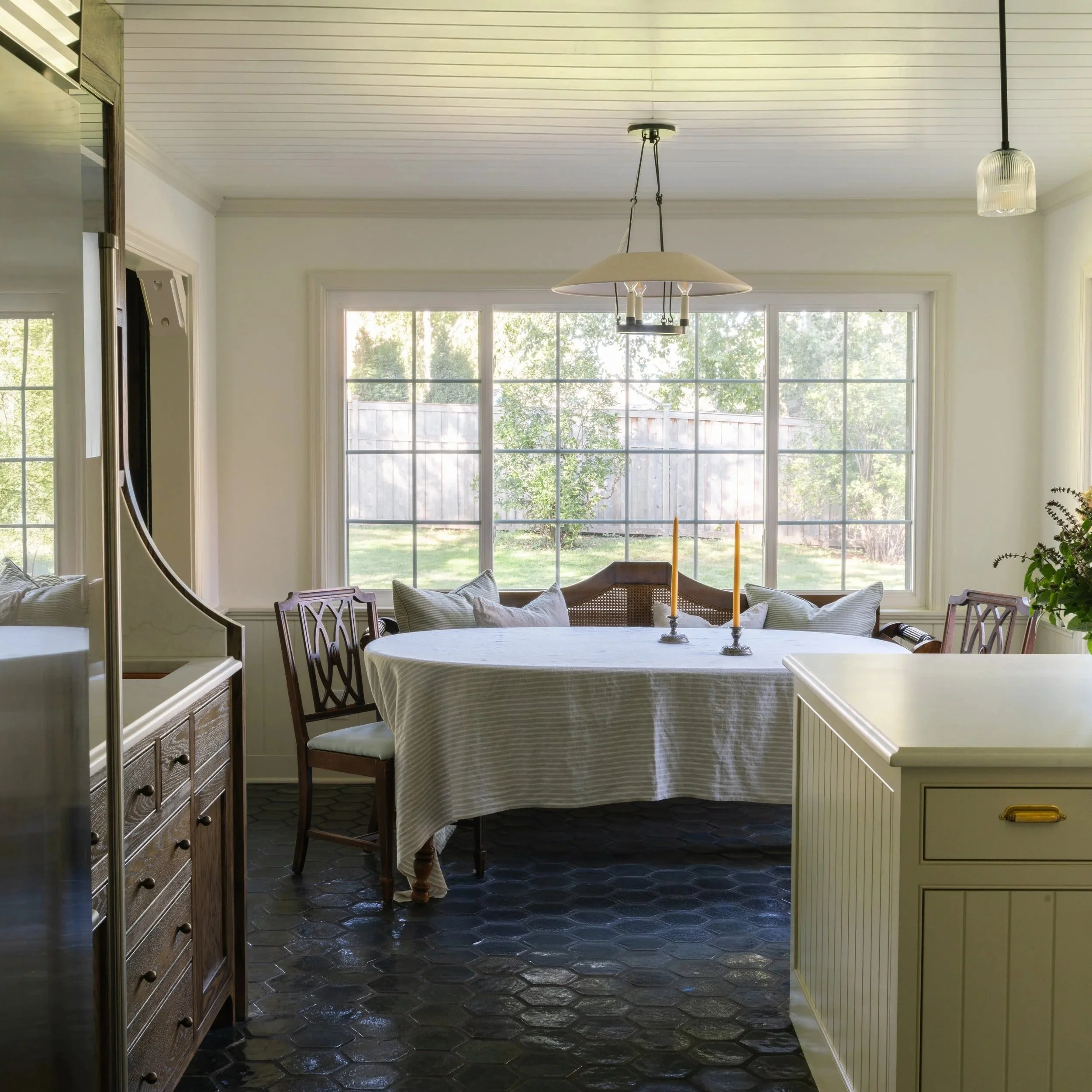
Mendota Heights (design by Merri City)
Few elements shape the feel of a room quite like what’s underfoot. In an older home, flooring is part of the architecture, part of the history and part of what gives the house its personality. The right flooring can feel like it was always meant to be there, while the wrong choice can make an otherwise thoughtful renovation feel out of place.
At Tusk, we spend a lot of time thinking about how new materials can work beautifully alongside the original bones of an old house. So we talked to our friend and frequent collaborator, Emily Nitz, founder and lead designer of Merri City, about how she approaches flooring decisions in older homes—from her go-to materials to common remodeling mistakes to avoid.
Hardwood: The Old-House Workhorse
When it comes to flooring in any home, hardwood is hard to beat. It’s warm, durable and versatile enough to work with just about any design style. In an older home, it also has the benefit of feeling right at home with original trim, millwork and other architectural details.
Before choosing something new, though, Emily starts by looking at what the house already has.
Original Hardwood
“Original wood floors can’t be replicated, but even floors that are in rough shape can often be refinished to look brand new,” Emily says.
Old floors don’t necessarily need to look perfect to be worth saving. Scratches, wear and years of patina can often be sanded away—or simply become part of the character of the house.
At our Mount Curve project, for example, the original wood floors were refinished rather than replaced. They now hold their own alongside the home’s more modern design, helping the new work feel connected to what was already there.
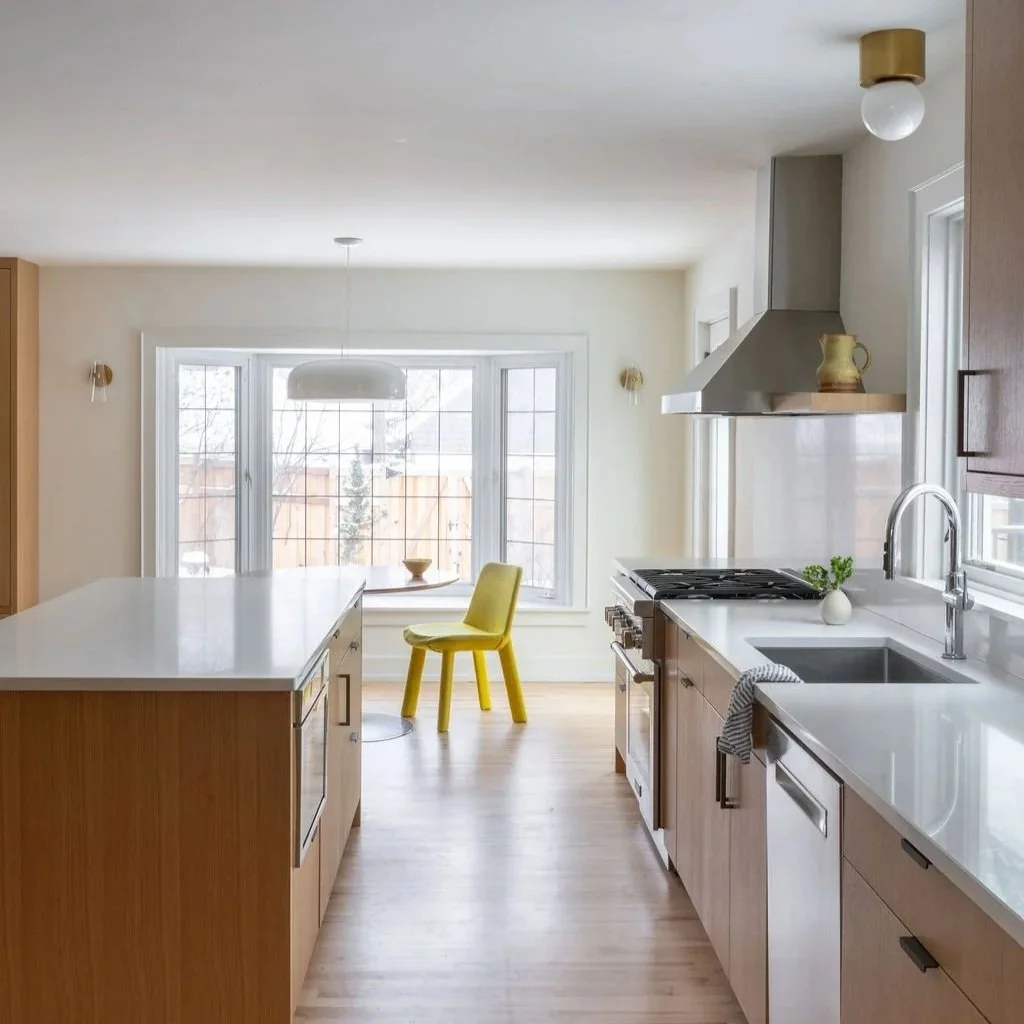
Mount Curve (design by Merri City)
New Hardwood
When original hardwood isn’t salvageable—or simply isn’t there to begin with—Emily often turns to oak. “I will use it in any space—living, kitchen, mud room, etc. It always feels appropriate.”
Narrower-width oak is one of her go-to choices, partly because it can work across a wide range of home styles and design aesthetics. In a Craftsman, it can reinforce the warmth of the original woodwork. In a Tudor, it works comfortably alongside traditional millwork and masonry. And in a more contemporary renovation, it adds warmth without making a space feel overly traditional.
And then there's the practical advantage: longevity. “The ability to refinish hardwood flooring makes it a first choice,” Emily says.
That’s a meaningful advantage over materials like LVP, which generally need to be replaced once they’re worn. Hardwood, on the other hand, can be sanded and refinished two, three times or more, allowing the same floor to evolve with the home over the years.
Tile: Have Fun With It
Tile is another place where Emily likes to think about what’s already there—and where she encourages homeowners to have a little more fun.
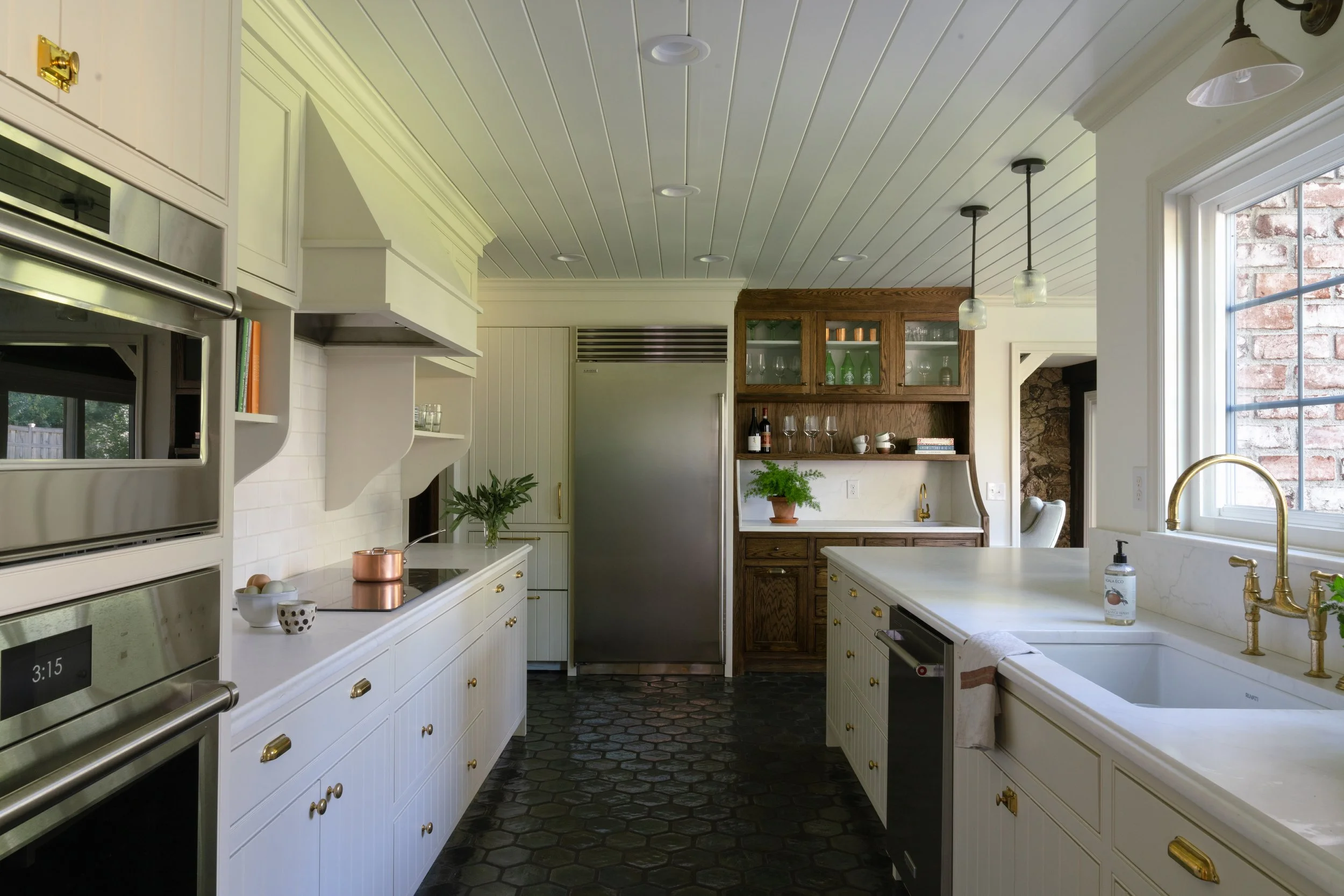
Mendota Heights (design by Merri City)
Original Tile
Original tilework is often worth keeping, Emily says, even when it doesn't obviously match the rest of a renovation plan.
Case in point: at our Mendota Heights project, the kitchen had handmade blue hexagon tile original to the house—the kind of detail you simply can't buy new. Instead of ripping it out, Emily designed the rest of the kitchen around it. "It is 100% what makes that project stand out from the many white kitchens out there."
It’s a good reminder that not every element in an older home needs to coordinate obviously with everything around it. Sometimes, the most interesting spaces are the ones that let a unique, original detail lead the way.
Before you assume old or damaged tile has to go, have a pro take a look. Cracked or missing tiles can sometimes be patched with salvaged pieces or reproductions, and a deep clean and re-grout can often make old tile look dramatically better without replacing the material itself.
New Tile
For new tile, Emily often starts by looking at the scale and feel of what might have been used in the home’s original era. Smaller-format stone and ceramic mosaics—like hexagons, penny tile or simple squares—can feel particularly natural in an older bathroom or kitchen.
But that doesn’t mean you have to stop at traditional white, or even stick to a solid color. “I just love all of the techniques happening in tile,” Emily shares. “From mid-priced options in amazing glazes and colors to small local makers hand-painting tile, there are so many ways to have fun with design.”
Tile can be an opportunity to bring in something a little unexpected: a bold shade, a handmade finish or a pattern with personality. An older home already has a strong architectural point of view, so a little color, pattern or variation can add unique character without overwhelming the space.
As Emily puts it: “If there is a color or pattern tile that makes you SO happy, you should go for it!”

East Isles Victorian (design by Yond Interiors)
A Few Flooring Mistakes To Avoid
Replacing original flooring too quickly
If your existing hardwood or tile is in rough shape, get a pro’s opinion on what can be saved before assuming everything has to go. A little patience up front can save you from removing a detail you'll wish you had kept later on.
Choosing only for looks
A gorgeous material that requires more maintenance than you're willing to give it isn't the right material for you. Think about kids, pets, traffic, moisture and your honest tolerance for wear. The best flooring choice isn’t necessarily the most beautiful option on the showroom floor—it’s the one that works for the way you actually live.
Mistaking durability for longevity
It’s easy to assume that the most durable material will also have the longest life. But durability doesn’t always equal longevity.
“Sometimes, homeowners mistakenly think there are materials that are indestructible, like LVP or LVT,” Emily says. “It’s true that they might not get scratched by your dog, but when a corner chips or something warps, it makes things look ‘old’ so fast.”
A material can hold up well to everyday wear and still be difficult to repair or refresh when something does go wrong. That’s where materials like hardwood, stone and ceramic tile can have an advantage: they can be repaired, refinished and age in a way that adds to their character.
“Natural materials like hardwood, ceramic and stone tile can take a little wear and tear and still look beautiful. It adds character instead of looking cheap,” Emily says. “It totally makes sense that when you are investing a large amount of money in a renovation, you want things to last forever. Unfortunately, nothing does! So it is more important to consider what materials age best, if longevity is your goal.”
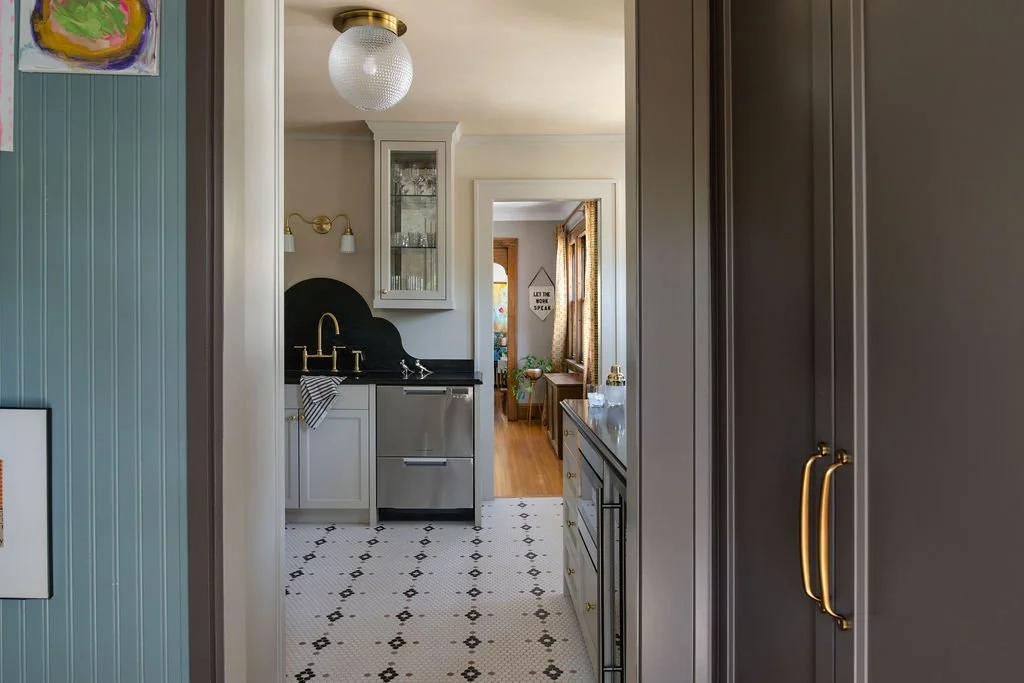
Goodrich (design by Tusk Builders)
Playing it too safe
There’s a difference between timeless and neutral. If a colorful tile makes you happy every time you walk into the room, don’t be afraid to go for it.
“Resale is one consideration, but it shouldn’t be the only one,” Emily says. “Make choices that will bring joy to your daily life now.”
Chasing an overly trendy finish
At the same time, there’s value in thinking past what’s popular right now. Flooring is expensive and disruptive to replace, so it’s worth choosing something with staying power.
That doesn’t mean avoiding trends altogether. It means asking whether you’re drawn to something because it truly suits your home and taste or simply because you’re seeing it all over Pinterest right now.
The beauty of an older home is that you don’t have to start from scratch. Sometimes the most compelling design choice is already underfoot; other times, it’s a new material that brings a fresh perspective. The best renovations leave room for both: the details worth preserving and the personal choices that make the house feel like yours.
Big thanks to Emily Nitz of Merri City for sharing her design expertise with us!
Need help planning your old-home remodel? We’d love to learn more about your space, your vision and how we can help bring it to life. Whether you’re gathering ideas or ready to dive in, let's talk.